
Three Days of European Collaboration as EUNICoast Partners Visited Åland
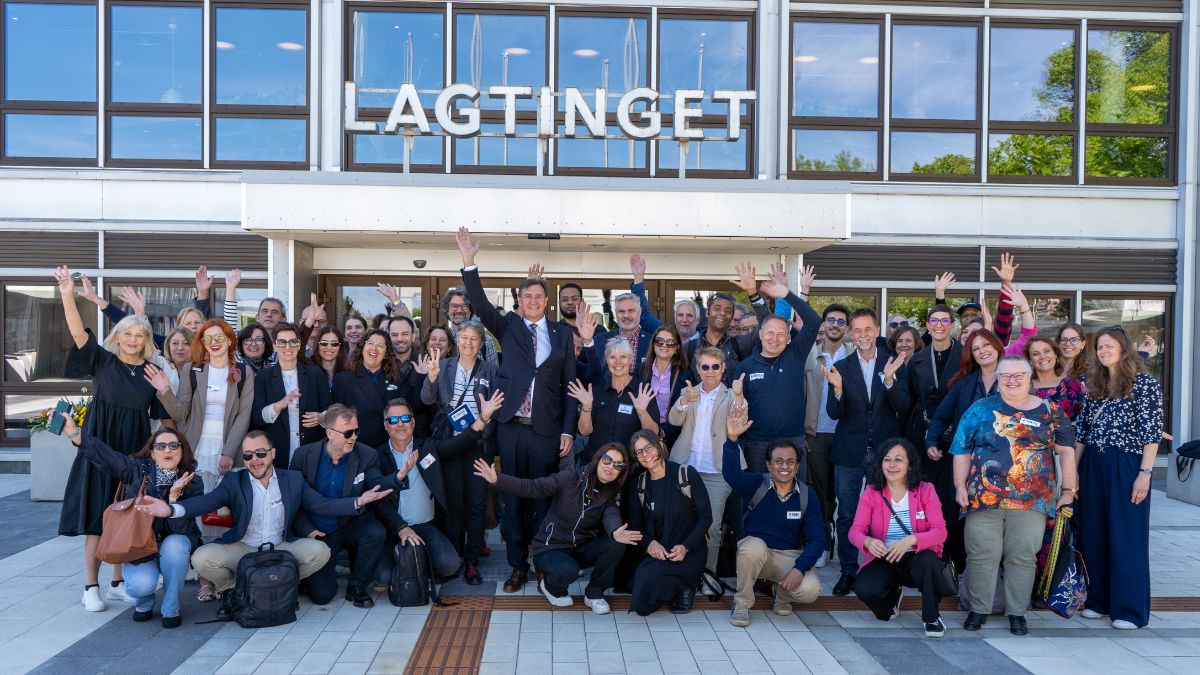
It was sunny and warm on Monday, 1 June 2026, when university staff from Bulgaria, Slovenia, Germany, Croatia, Greece, France (including both mainland France and Guadeloupe), Portugal, Spain, Italy, and Poland, gathered at the southern campus of Åland University of Applied Sciences. With international cooperation in focus, Åland University of Applied Sciences hosted the EUNICoast university alliance partner meeting on Åland.
This is the first time in EUNICoast’s history that a partner meeting has been held on Åland, so it is incredibly exciting to welcome our colleagues and friends here, especially during the most beautiful time of the year, says Matias Waller, Rector of Åland University of Applied Sciences.
EUNICoast brings together universities located in port cities, coastal territories, and island regions. The alliance aims to develop a new “European University” with a shared educational offering and other activities that meet the needs of students, society, and industry.
EUNICoast opens up entirely new opportunities for degree programmes, research, and project funding in collaboration with our partner universities, as well as opportunities to benefit from others’ experiences in many different contexts. The alliance is creating new networks in areas where the university has not previously had international cooperation projects. I am impressed—and inspired—by all the activities that have already been launched within the alliance. EUNICoast opens pathways into Europe for the university’s staff and students while at the same time putting both the university and Åland on the map across different parts of Europe, says Katarina Fellman, Chair of the Board of Åland University of Applied Sciences.
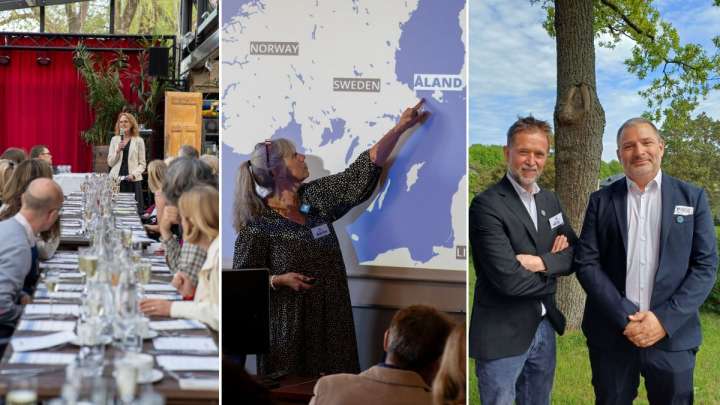
From left to right: Katarina Fellman, Anna-Lena Groos, and Matias Waller together with Marcos
Nadal, EUNICoast Secretary-General.
Education and Communication in Focus
The focus during the three-day meeting was on further developing two of the alliance’s work areas: Work Package 2, which focuses on education, and Work Package 7, which focuses on communication.
Within the education work package, discussions covered topics such as micro-credentials, joint master’s programmes, collaboration with industry, and ways to foster student engagement.
Pau De Vílchez Moragues, Vice-Rector at the University of the Balearic Islands and leader of Work Package 2, tells us that sustainability and artificial intelligence were also discussed—two topics that naturally come to the forefront when designing educational systems intended to help address the challenges facing 21st-century society.
Pau describes the Åland meeting as both enjoyable and productive. He believes that Åland, its autonomous status, and the way Ålanders manage and find solutions to their challenges serve as an example of the resilience needed in coastal and island regions.
I know it is unusual for islands within the EU to enjoy the kind of autonomy that Åland has, but I believe that small communities need self-determination and the ability to develop their own solutions to the challenges they face, because there is no one-size-fits-all solution. Islands are particularly vulnerable in many ways, including from an economic perspective. We need to be able to make our own decisions if we are to thrive and enjoy a better quality of life.
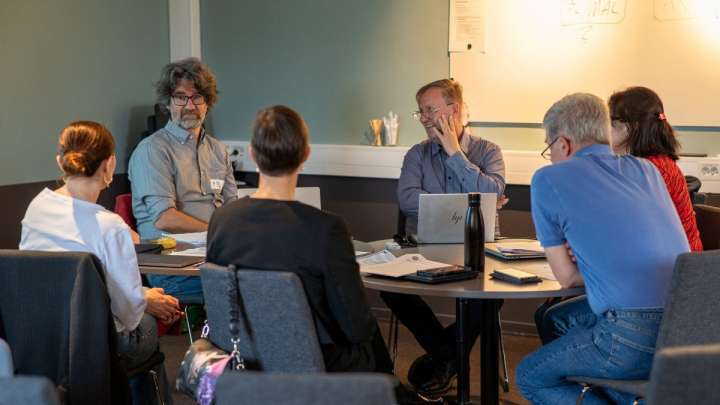
Pau De Vílchez Moragues second from the left.
Within Work Package 7, the focus was on communication and dissemination. Communications consultant Charlelie Jourdan led a workshop for participants centered on storytelling, making complex projects more visible, and ensuring that all project partners are aligned in how they communicate about EUNICoast.
In a project like EUNICoast, a great deal of work takes place behind the scenes, and it can take many years before the final results become visible in society. Effective communication highlights the journey and the day-to-day work involved, which can encourage people to engage with and participate in the project in different ways, Charlelie explains.
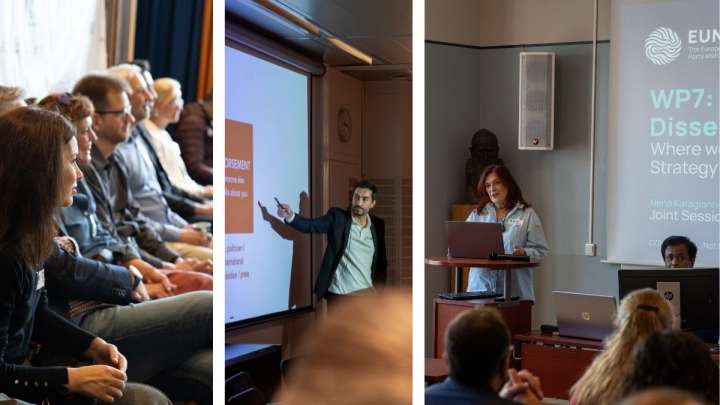
Charlelie Jourdan seen in the middle picture.
An Introduction to Åland
On Tuesday, the visitors were welcomed to the Parliament of Åland, where Speaker Jörgen Pettersson and Susann Simolin, Director of the Åland Islands Peace Institute, greeted them and provided an introduction to Åland and its unique status as an autonomous and demilitarised region.
It is important to remember that Åland is the result of international agreements. Ever since the issue was most prominent in the years following Finland’s independence in 1917, the international community has shown an interest in Åland’s future, and that engagement is something we must maintain. We should be a subject in our relationship with the outside world, not an object that others merely talk about. EUNICoast is an excellent example of how we are participating in the arenas where the future is being discussed, Jörgen says.
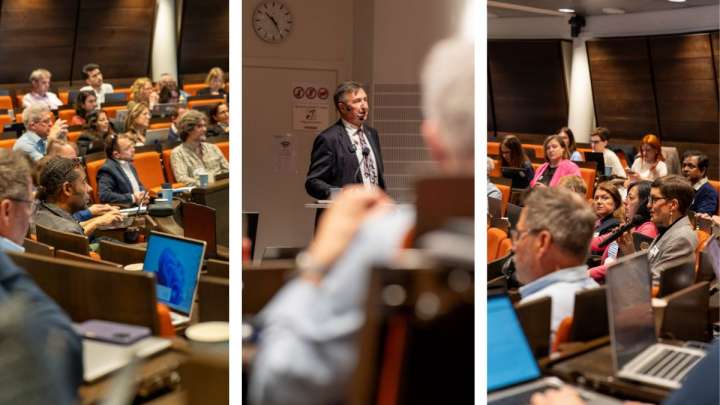
Photos from the Parliament of Åland. Jörgen Petterson seen in the middle picture.
In addition to the meeting programme, a range of activities were organised to introduce the visitors to Åland and encourage engagement with local society. Participants enjoyed guided tours of Mariehamn and visits to historical sites such as Bomarsund, the Notvik Tower, and Kastelholm Castle. Other activities included morning yoga at Tullarns Äng, a visit to Nabben Beach, and so-called City Games, where participants worked in teams to complete various challenges around Mariehamn with the aim of exploring the city.
In the evening, the group gathered for a joint dinner at Brasserie Ångbåtsbryggan.
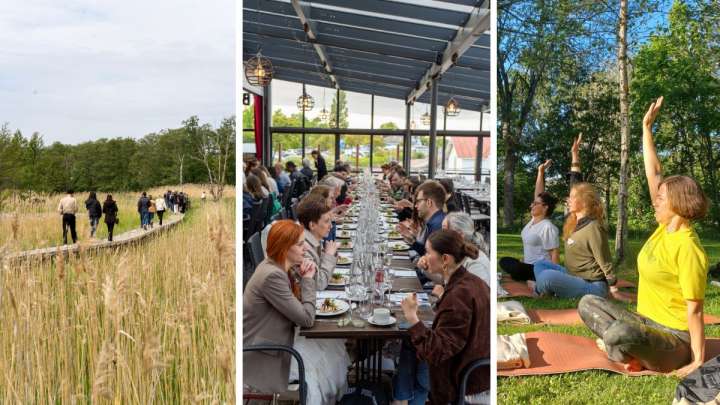
Photos from left to right: excursion to Nabben, dinner at Brasserie Ångbåtsbryggan, and morning
yoga at Tullarns Äng.
Future Opportunities for Collaboration
On Wednesday, the intensive work concluded with a joint lunch and a tour of the university’s northern and western campuses. Two people heavily involved in the planning and organizing of the partner meeting were Anna-Lena Groos, Program Manager for Åland University of Applied Sciences’ degree programs in Business Administration and Tourism and Leadership, and Magnus Lindberg, co-leader of EUNICoast Work Package 2.
Magnus previously worked as project manager for the university’s now-completed project Development of Blended Learning and Digitalization at Åland University of Applied Sciences (E-Hub). He explains how E-Hub and the digital transformation of the university have helped lay the foundation for a complex development initiative like EUNICoast to take root and grow:
In addition to providing the university with new digital equipment, E-Hub also helped us get used to working in new ways, which we can now benefit from in EUNICoast. The university’s new renewable energy laboratories developed within E-Hub are also highly relevant, as one of the thematic areas within the alliance is renewable energy. In that sense, Åland University of Applied Sciences can now contribute its expertise, he says.
Anna-Lena is involved in Work Package 2 within EUNICoast, and in addition to her role as Program Manager at Åland University of Applied Sciences, she is also engaged in many of the research and development projects carried out at the university.
EUNICoast differs from the university’s other projects in that it involves only universities. This is noticeable in the discussions and the way we collaborate, and I see many opportunities for future cooperation even after EUNICoast comes to an end, she says.
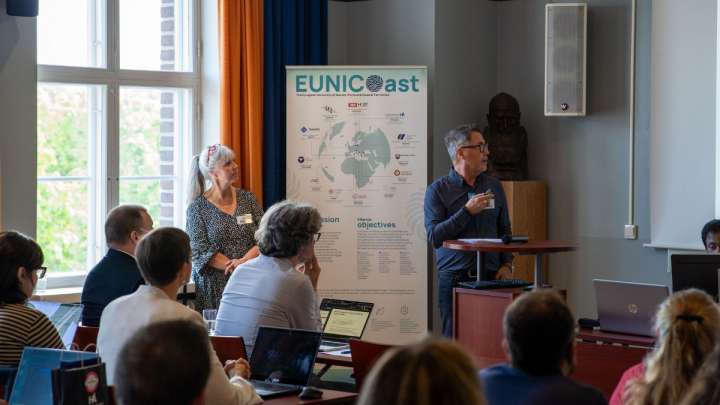
Photo: Anna-Lena Groos and Magnus Lindberg.
Another person who sees strong potential for expanded international cooperation is Petra Frent Kaab. Petra is the Alliance Manager for EUNICoast and has been involved in designing the alliance from the very beginning. She describes it as both exciting and challenging to see EUNICoast move from the development stage into implementation, and says she feels highly motivated by working with so many skilled colleagues from different countries.
When asked what EUNICoast could mean for research collaboration between partner universities, she responds:
“EUNICoast does not actually fund research itself, but it connects researchers and strengthens capacity. We are already seeing results in the form of colleagues from different hubs within EUNICoast joining forces in applications for Horizon Europe projects. We have also been awarded a European Excellence Initiative, which was only possible thanks to collaboration between researchers from different EUNICoast partner universities. I am convinced that this cooperation and networking will continue to grow in the future. In this way, EUNICoast can play a strategic role in making research more visible across the rest of Europe.”
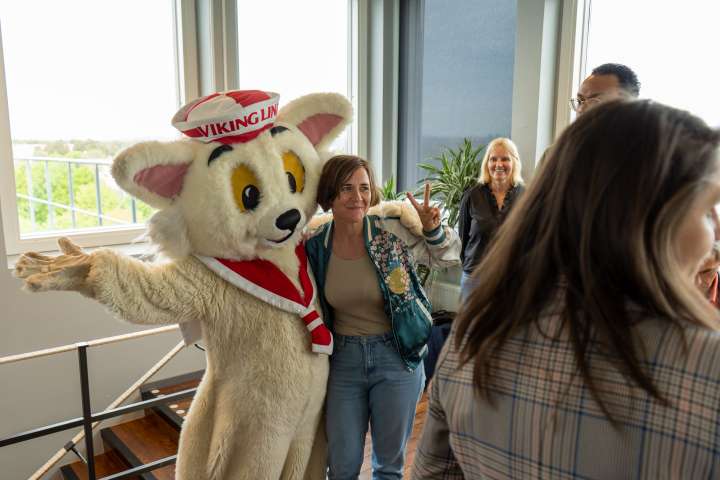
Photo: Petra Frent Kaab together with Ville Viking, who paid a visit during Wednesday’s closing
lunch in The Tower at the southern campus of Åland University of Applied Sciences.
Kim Westerlund, Vice Rector at Åland University of Applied Sciences, concludes by describing the meeting days as intense but very rewarding.
“You can see that the hard work we all put into EUNICoast is what unites us. It means a great deal to us at Åland University of Applied Sciences to host and welcome visitors from all over the world. And people are very happy to be here and to meet in person. After all, it is the people who form the core of a collaboration like EUNICoast.”
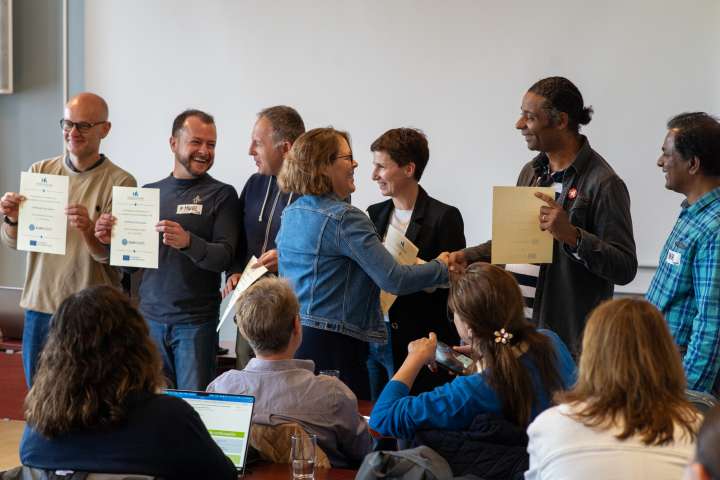
Photo: The winning teams in the EUNICoast City Games received diplomas during the closing
ceremony on Wednesday.
Photographer: Erica Österberg.